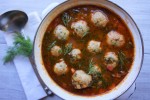
Winter Squash, Summer Squash, Tomatoes

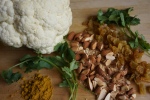
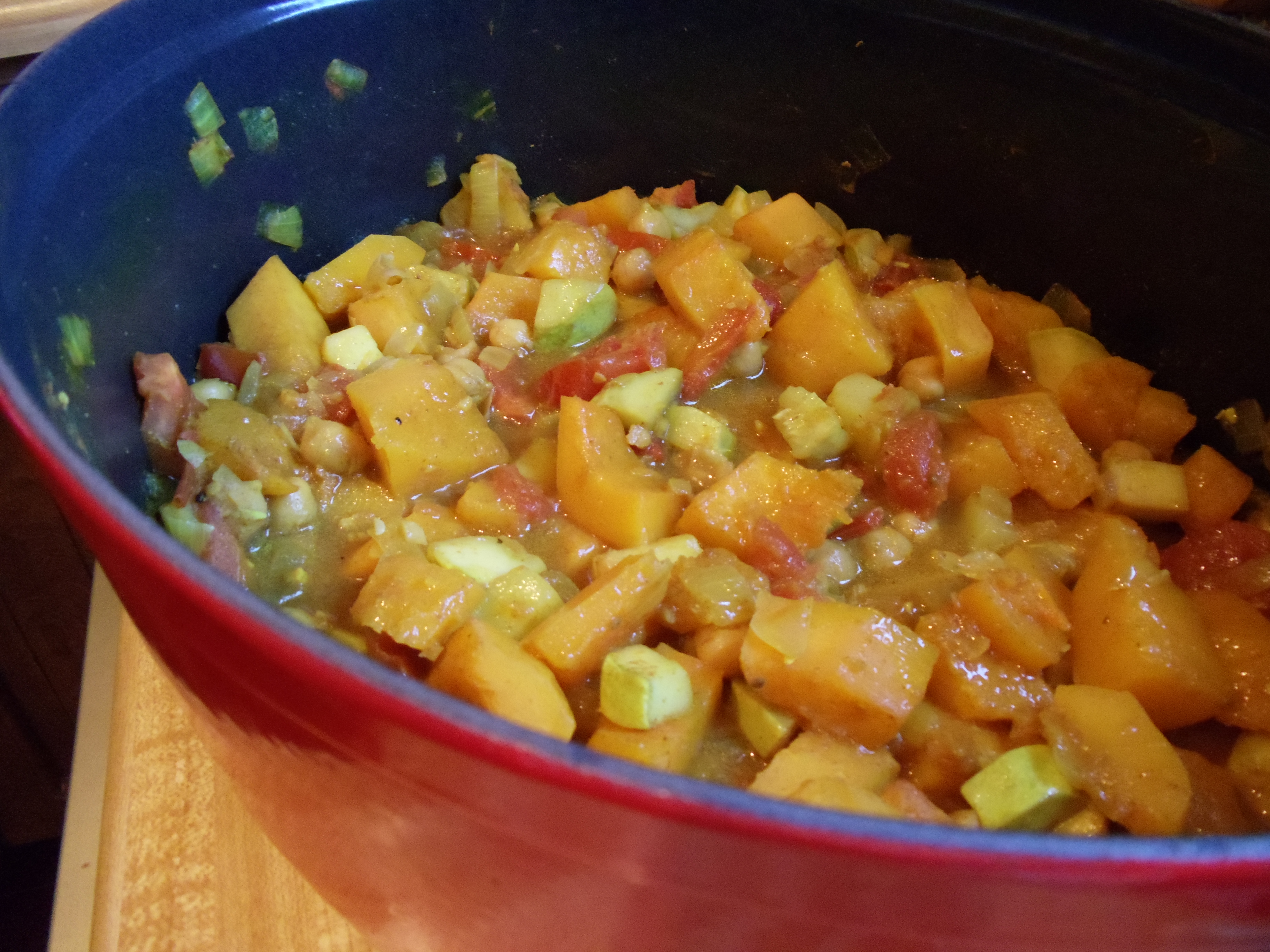
Here’s my new favorite fall fix, slightly sweet with warming spices, with a tang of tomatoes and the savor of legumes. I’ve made this stew with sugar pumpkin, butternut squash, zucchini, and sunburst squash, with fantastic results, and can think of many upcoming variations with carrots, sweet potatoes, yellow crookneck squash, which makes this recipe a keeper, in my books.

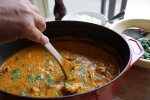
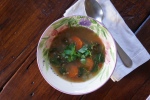
Moroccan Squash Stew with Chickpeas and Saffron Almond Israeli Couscous
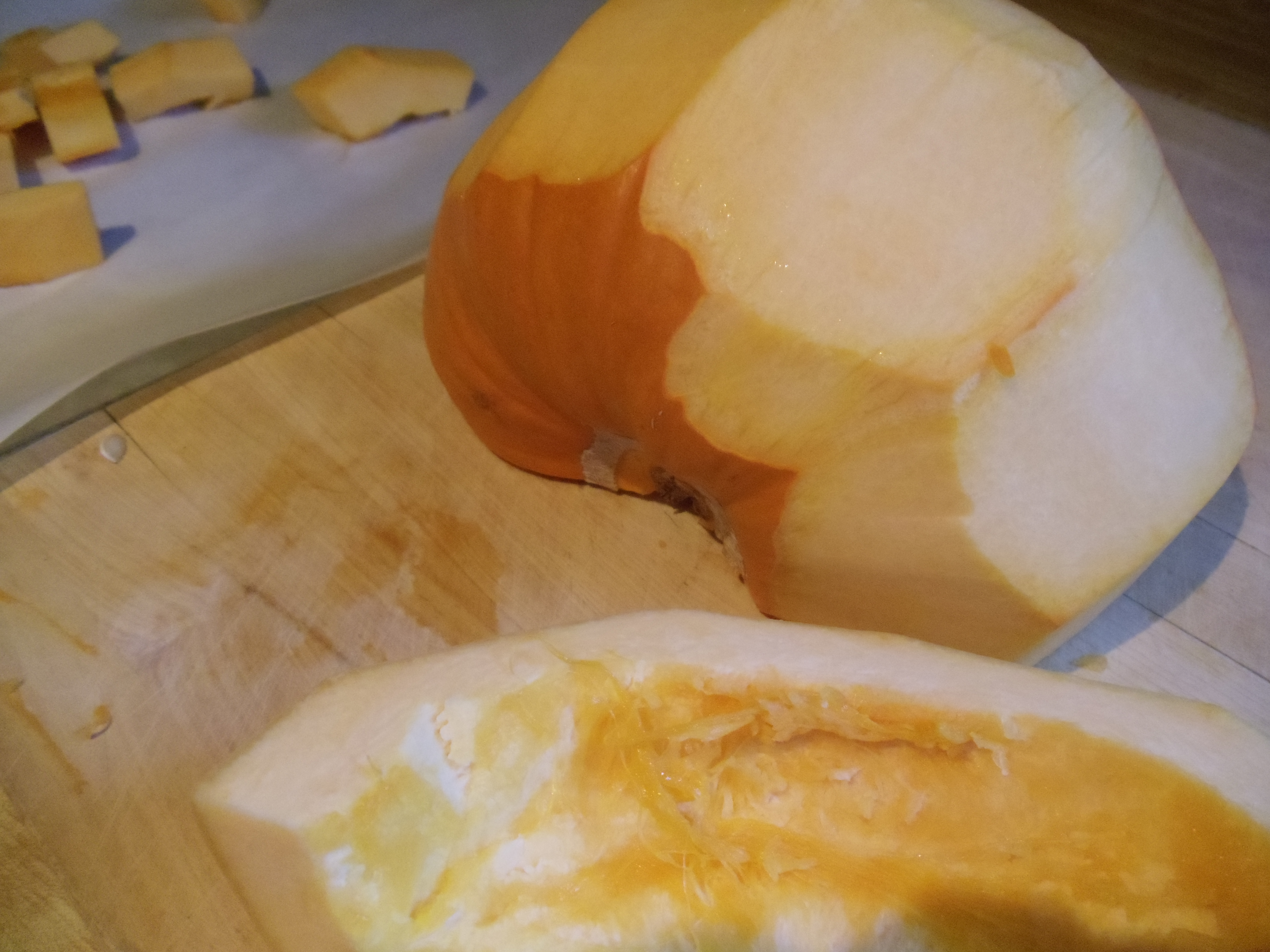
Peel the squash using a sharp chef’s knife, scrape out the seeds and cut into 1-inch chunks. You can save time by purchasingn pre-cut, packaged butternut squash.

2 cups of diced winter squash, such as butternut, sweet pumpkin

Olive oil, salt & pepper

1 onion, diced

2 garlic cloves

1-inch segment of fresh ginger, minced

1 cinnamon stick

1 teaspoon cumin

1 teaspoon coriander

1 cup of summer squash, such as zucchini, sunburst, yellow crookneck

1 cup of seeded, diced tomatoes, or canned diced tomatoes if fresh are not in season

1 cup homemade vegetable stock, or good quality, low sodium packaged broth

1 can of garbanzo beans, rinsed and drained

1 cup of Israeli couscous

1 1/2 cup water or stock

1 pinch of saffron

1/4 cup toasted almonds

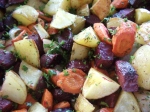
Heat oven to 350 degrees, and season winter squash with olive oil, salt and pepper. Roast in the oven until soft and slightly browned. Heat a Dutch oven over medium-high heat, and add a splash of olive oil. Add onions, garlic and ginger, and cook until slightly soft. Add spices, stir and cook until spices are fragrant, about 2 minutes. Stir in summer squash and tomatoes, season with salt and pepper, then cook for about 2 minutes, until vegetables are slightly soft. Then add stock, garbazo beans and roasted winter squash, bring to a boil and cook for about 10-15 minutes, until liquid thickens and consistency is stewy. Remove the cinnamon stick and season with salt and pepper.

Bring water to a boil in a small pot or tea kettle. Heat a small saucepan over medium-high heat, and add a splash of olive oil. Toast the couscous in the pan for about 2 minutes, add a pinch of salt and a pinch of crumbled saffron threads and water. Bring to a boil, then lower to a simmer, cover pan and cook for another 5 mniutes, until couscous is tender. Turn off the heat and keep pan covered for about 5 minutes, then fluff with a fork. Fold the almonds into the couscous and serve with the squash stew.
Carrots, Onion and Celery

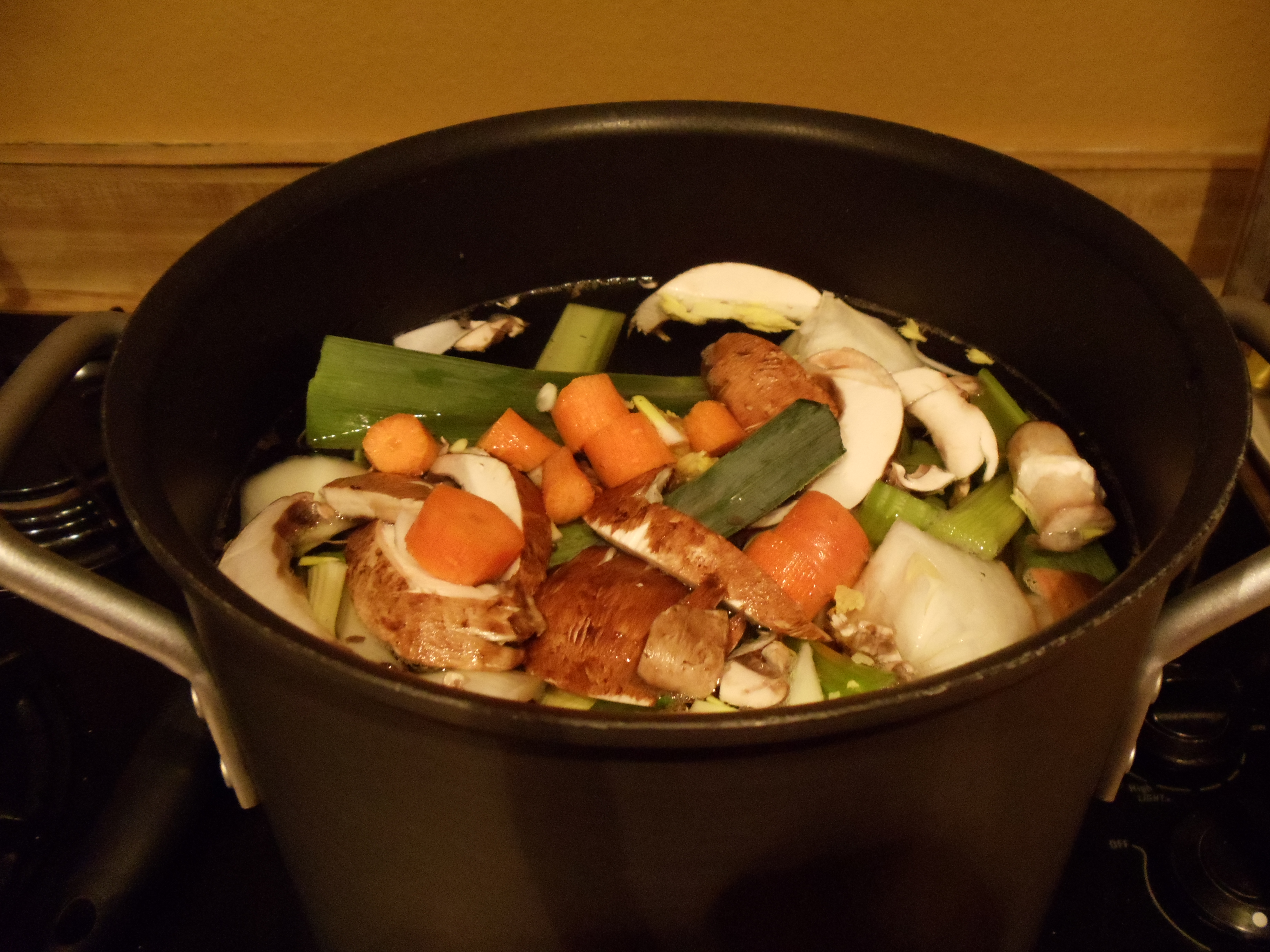
One person’s scraps are another’s treasure, at least when it comes to making veggie stock. The most humble parts of the most humble vegetables, such as onion skins, celery tops and carrot greens, (translation: the parts that normally go into the compost bin) are blended with water, a frugal bay leaf, and some of the wilted ends of fennel or mushroom stems and a few peppercorns. Sounds delicious, right? Even though it sounds unlikely, it renders the most satisfying base for any soup.

Making vegetable stock appeals to the pioneer inside of me that is resourceful and prudent. All you need to start is an empty plastic bag inside of your refrigerator crisper drawer, or even in the freezer, and every time you have leek tops, carrot bottoms, kale or chard stems (just about everything but brassicas like broccoli or cauliflower), save it for stock making day. Once you have a gallon bag full of vegetables, throw them into a 12-quart stock pot along with one chopped onion, a few chopped carrots, a few stocks of chopped celery, then fill the pot to the top with cold water. Add a bay leaf, a few sprigs of thyme, a teaspoon of whole black peppercorns, and let it come to a boil, then simmer for 2 hours.

All of the vegetables get strained out of the liquid, and then cooled in small batches, then stored in the freezer or fridge. Use it for soups, braises and stews, it makes all the difference in flavor.

Farm Box Day

Today’s farm box told a story of the Mediterranean, with lots of summer squash, basil, breathtaking tomatoes, rainbow chard, gorgeous long French radishes, and vivid green beans. There was a lovely selection of fruit: honey crisp apples, Valencia oranges, plums and Oro Blanco grapefruit. When I saw all of that end of summer bounty, I went straight to Italy and France, then took a small detour to Asia. I rack up quite a few frequent flyer points in the comfort of my own kitchen.

My goal? Get all of my cooking done today while it’s all vibrantly farm fresh, then kick my heels up over the weekend. It was easy to do with the inspiration of the Mediterranean flavors, now I can’t wait to dig in to these dishes:

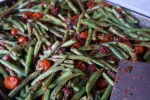
Chicken Provencal with Tomatoes, Green Beans, Roasted Lemons and Olives

Citrus Cilantro Quinoa Salad with Grilled Strip Steak and Asian Flavors/Asian Pickled Cucumbers and French Radishes

Summer Minestrone Soup

Farm Box Veggie Lasagna with Fresh Herb Ricotta

I’ll be posting a few recipes and photos after I come back from my relaxing weekend, so please come check them out!

CSA Day at Tanaka Farms

One of the benefits of our box from Tanaka Farms is CSA Day at the Farm, which is truly my happy place. I bring a carload of kids down to Irvine, and we get to take a wagon ride around to see what the season brings. This time of year, it’s the pumpkin tour, with a neverending field of pumpkins of all shapes, variety and size.

For the harvest season, they have a petting zoo with goats, micro pigs, sheep and a llama, plus a wagon tour complete with a pumpkin cannon blast off. Then kids weave their way around the corn maze while they lug the perfect pumpkins that they expertly selected despite our warnings that they wait until the end of the day. Of course, the adults end up hauling the pumpkin booty around the farm, or wheeling them around in a wheel barrow, which is much harder than it seems.

The farmers also put out a delicious and thoughtful spread of field fresh food, with slices of watermelon, grilled summer squash and onions, strawberry tomatoes (a hybird cherry tomato shaped like a strawberry and almost as sweet) and an amazing kale salad.

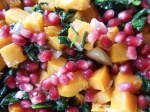
Kale, Apple, Cranberry and Pinenut Salad

Serves 6

This salad gets better when it has some time to hang out in the acidic dressing, as the kale softens and takes on a sweet flavor. The woman at the farm who made the salad said her forearms felt like Popeye’s because she tossed it with her bare hands to make it tender.

1 bunch of kale, ribs and stems removed, torn into small, bite-sized pieces

juice of one lemon

2 tablespoons olive oil

1 tablespoon apple cider vinegar

2 teaspoons agave nectar

salt & pepper

1 Fuji apple, cored, cut into a small dice

1/4 cup dried cranberries

2 tablespoons toasted pine nuts

Toss kale with lemon juice, olive oil, vinegar and agave, until leaves are well coated and become slightly softened. Season with salt and pepper, then chill in a fridge for 10-20 minutes. Toss in apples, cranberries and pinenuts to serve.

Fuji Apples and Kale

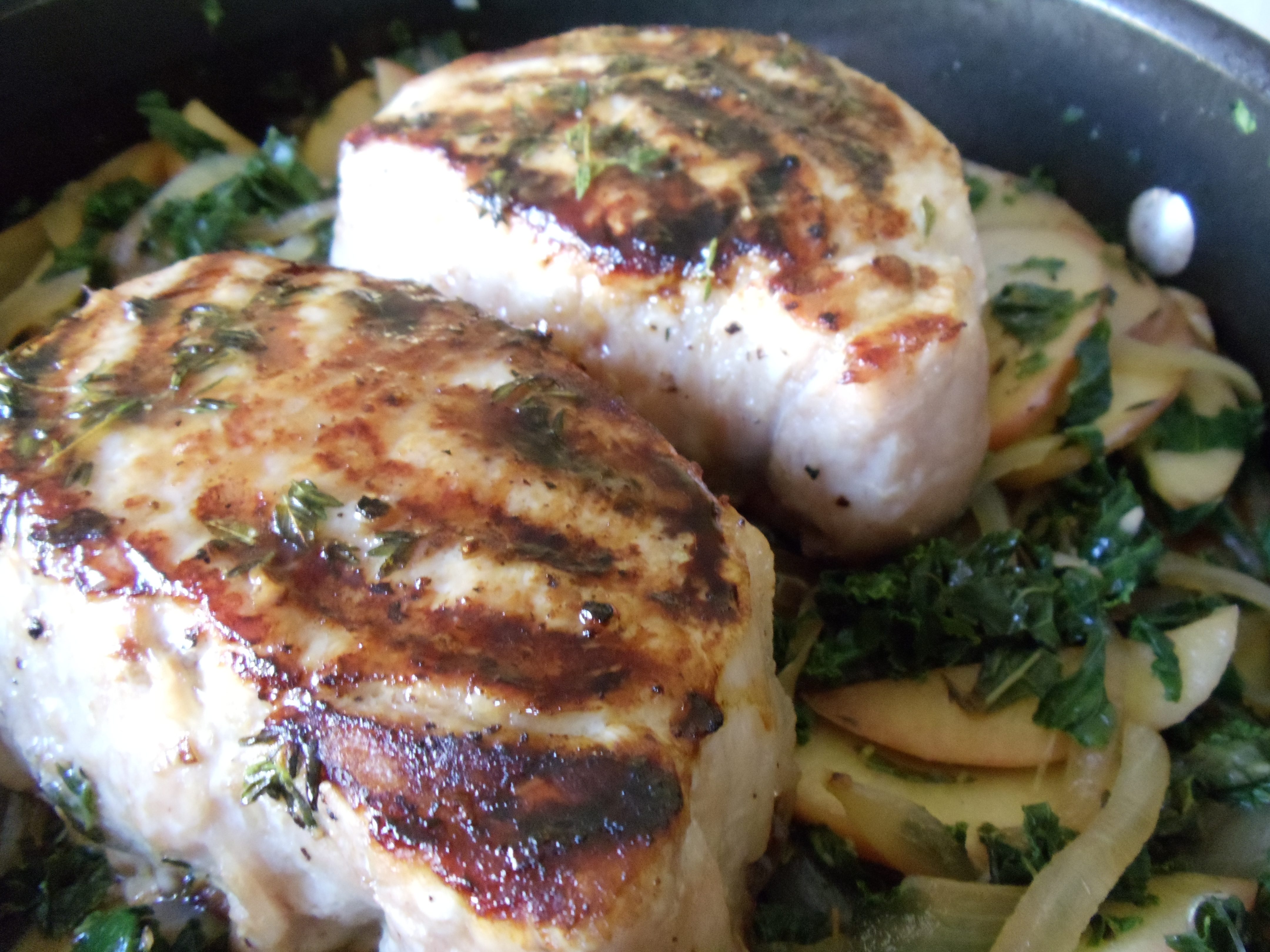
Say hello to fall flavors with a tasty, savory saute of kale, caramelized onions and apples, served with a hearty helping of maple glazed grilled pork chops.

Maple Glazed Pork Chops with Onion, Fuji Apple and Kale Saute

Serves 4

Pork Chops:

2 10-ounce thick cut pork chops (bone on or off)

Salt, pepper and olive oil

2 sprigs of thyme, stems removed

2 tablespoons maple syrup

Onion, Apple and Kale Saute

1 tablespoon of butter or olive oil (I like butter)

1 organic yellow onion, cut into thin slices

2 garlic cloves, sliced

2 sprigs of thyme

2 organic Fuji apples, cored, cut into thin slices

1 bunch of kale, stems and ribs removed, finely chopped

2 tablespoons apple cider vinegar

1 tablespoon maple syrup

For the pork chops: Heat oven to 350 degrees. Season the pork chops with salt, pepper, coat with olive oil, and sprinkle thyme leaves on. Heat a grill or grill pan until very hot (once you can hold your hand over the grill and feel heat radiating) and sear the pork chops until defined char marks form (about 3 minutes.) Turn over and cook the other side for another 3 minutes, then transfer to a baking pan. Put the pork chops in the oven and continue cooking until the meat reaches 145 degrees, using an internal probe thermometer, about 10 more minutes, basting with the juices a few times. Allow the pork chops to rest, then slice for serving.

For the saute: Melt butter or heat olive oil in a large skillet set at medium-high heat. Add the onions and cook until they start to brown, then lower heat and continue to cook until the onions caramelize, turning a golden brown, about 10 minutes. Add the garlic and apples, and cook until apples soften, then add the kale and cook while stirring until kale turns vivid green. Add vinegar and maple syrup, season with salt and pepper, and stir to combine. Serve with the slice pork chops.

Tomatoes, Zucchini & Cucumber

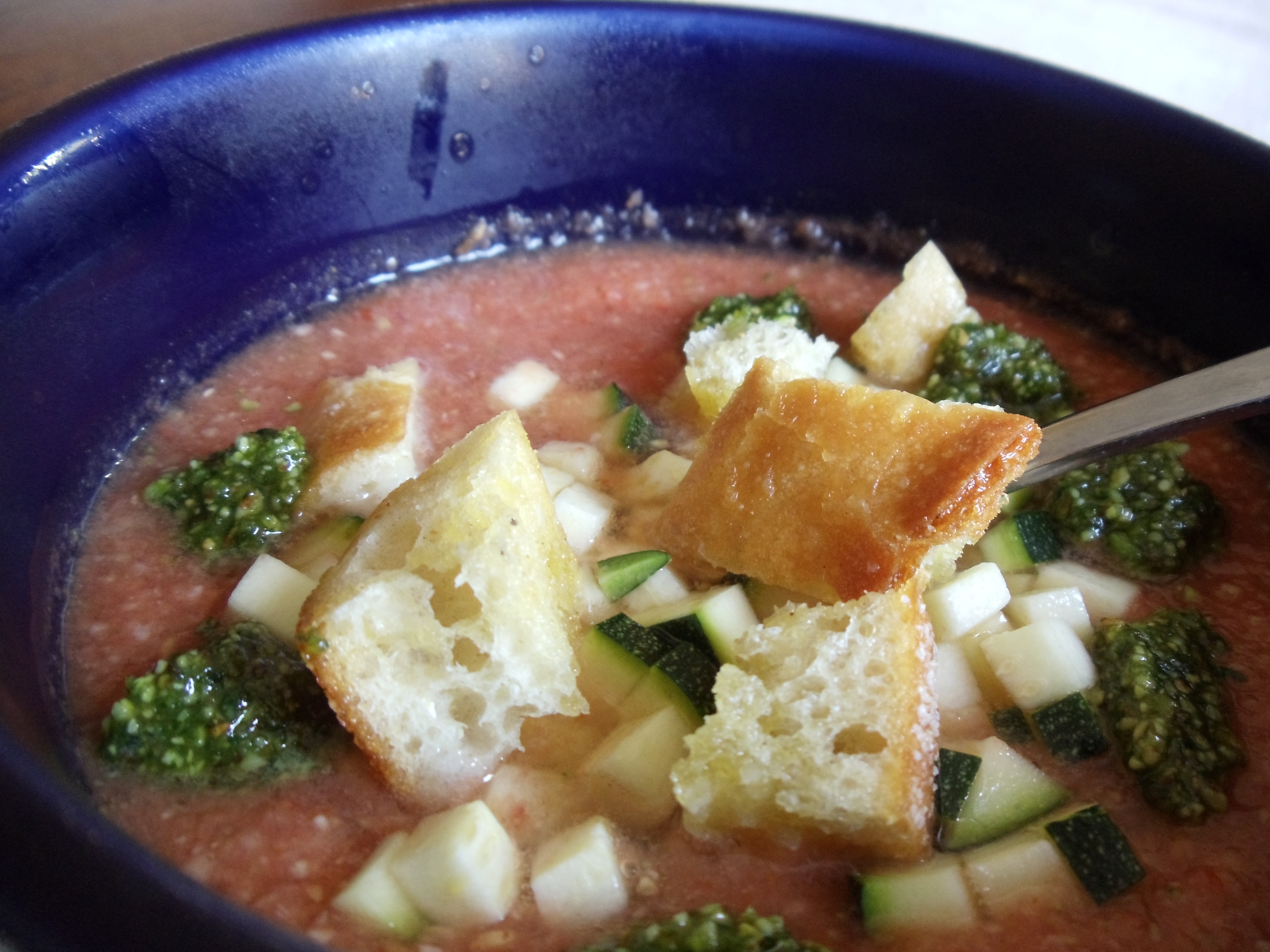
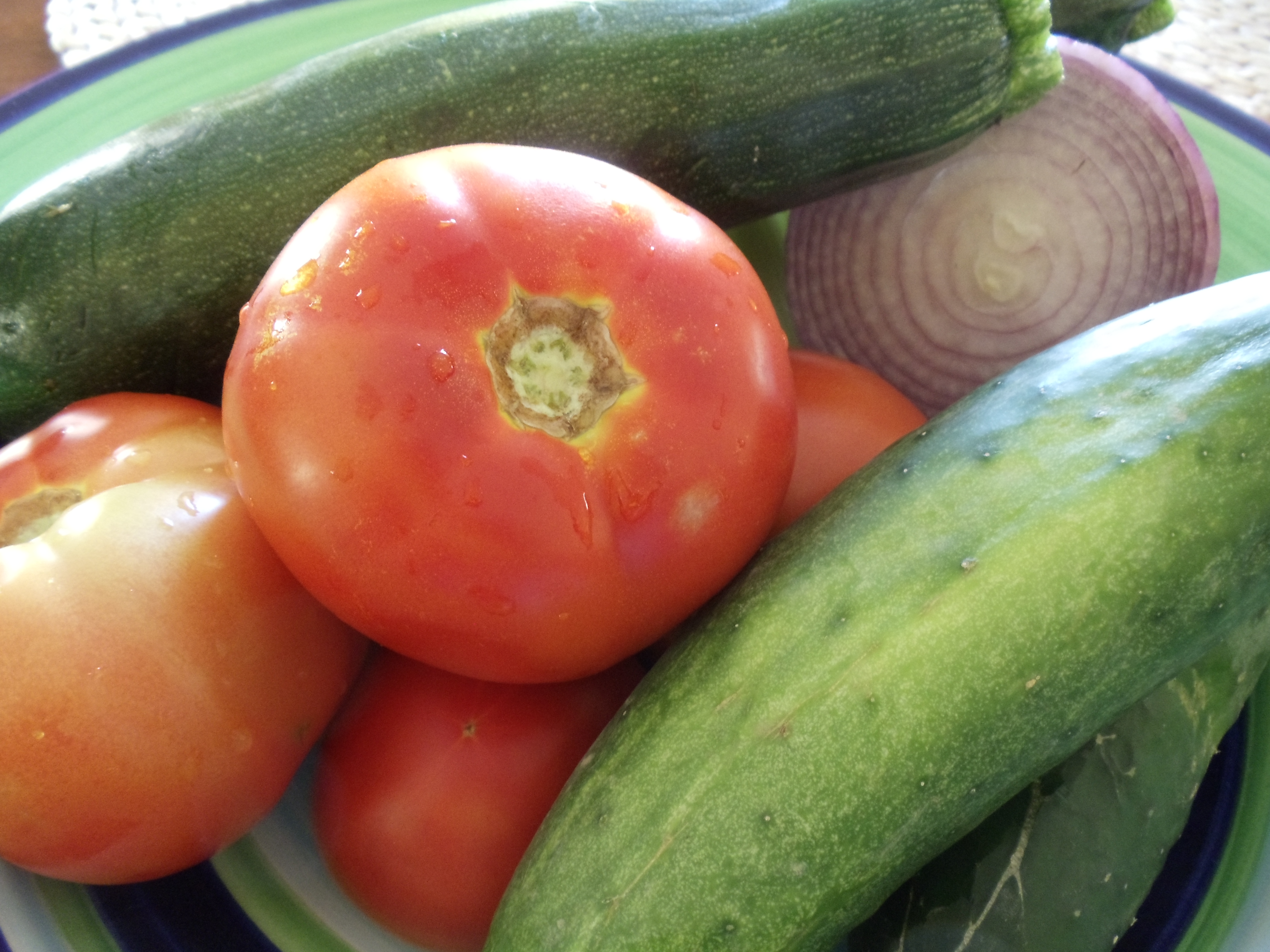
What a treat to find the makings of gazpacho in my CSA box today. I hadn’t prepared it all summer long, and the sun-kissed tomatoes, hearty cucumbers and zucchini were all the reminder I needed to stretch the season out a little longer. I’ve prepared this chilled soup recipe for so many years as a chunky puree, but discovered a new way to enjoy it from The Pioneer Woman, Ree Drummond, who holds aside some of the diced vegetables to stir back into the soup, making it eat like a crunchy, soupy salad. You can top this with avocado or grilled shrimp, but I like crispy, garlicky croutons and a hit of cilantro almond pesto to add even more body and brightness.

 Chunky Gazpacho with Almond Cilantro Pesto

5 vine-ripened tomatoes, cut into chunks

2 garlic cloves

2 stalks celery, cut into a small dice, divided into two portions

2 cucumbers, peeled and cut into a small dice, divided into two portions

1 zucchini, cut into a small dice, divided into two portions

1/2 red onion, cut into a small dice, divided into two portions

2 cups organic, low sodium tomato juice

1/4 cup extra-virgin olive oil

2 tablespoons sherry vinegar

dash of hot sauce

salt and pepper

toasted croutons made from French bread

For the pesto

1 bunch of cilantro

2 garlic cloves

1/4 cup of toasted almonds

1/4 cup of olive oil

salt and pepper

Place all of the tomatoes and garlic, and half of the remaining vegetables into the bowl of a food processor or blender. Add tomato juice, olive oil, vinegar, hot sauce and a generous pinch of salt and pepper. Puree until slightly chunky, with small bits of vegetables evident. Stir in the remaining vegetables, taste for seasoning, then chill in fridge for a half hour.

For the pesto: Using a small food processor, blend together the cilantro, garlic, almonds, olive oil and salt and pepper. Taste the pesto for seasoning, then add on top of the gazpacho before serving, along with the crispy croutons.

Farm Box Day

School’s back in session, and we’re back on track with our farm box delivery. I was chomping at the bit to get meals for the weekend done, as we have a full schedule of work, birthday parties and, hopefully, a lot of relaxing. Our box held Russet potatoes, carrots, kale, red leaf lettuce, grapefruit, Fuji apples, yellow wax beans, zucchini, cucumbers, green grapes, and vine-ripened tomatoes. There were options for cooking and for eating straight out of the box. We’ll enjoy the grapes and grapefruit for breakfast on Sunday morning, and I’m excited about turning everything else into dinner. Here’s what’s cooking at my house today:

Garlic Roasted Chicken with Rosemary Potatoes and Carrots

Sesame Tofu Stir Fry with Brown Basmati Rice and Red Leaf Lettuce Cups

Chunky Gazpacho with Almond Cilantro Pesto and Garlic Croutons

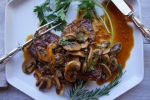
Grilled Maple Glazed Pork Loin Chop with Apple, Onion and Kale Saute

Recipes coming right up (that’s the work part of the weekend.) Hope you enjoy your farm box!

Kale

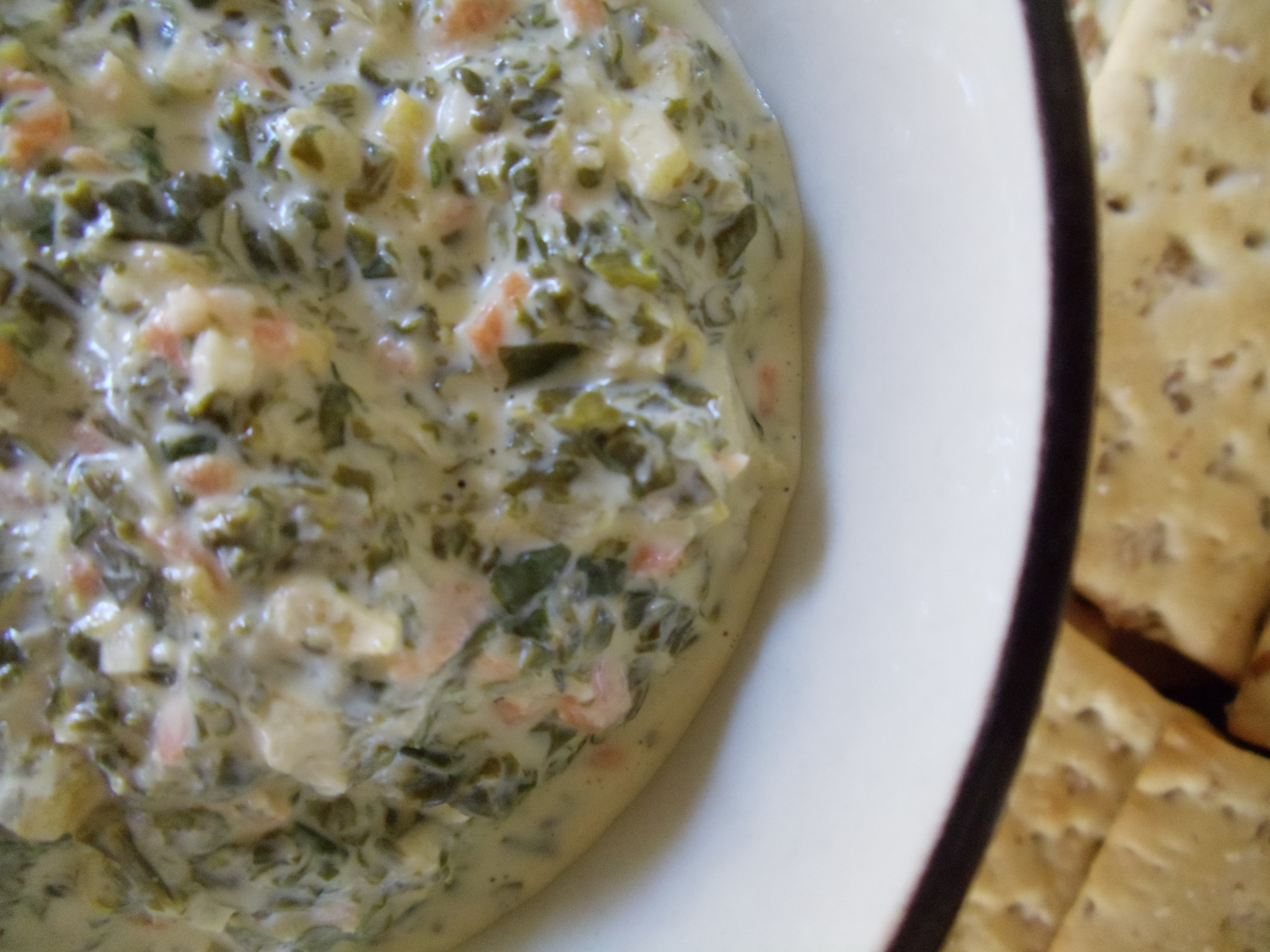
I love kale! I love that Farmer Kenny has crops and crops of it! There are times, however, when I daydream that I have a secret life as the New York Times bestselling cookbook author of Fifty Shades of Kale. In this popular tome, kale is transformed from a staple in soups, smoothies and “hand-massaged raw salads” and turned into something surprising. Fifty totally unique recipes, not a kale chip in the bunch. When I saw that Trader Joe’s had a “reduced guilt” Spinach & Kale Greek Yogurt Dip, I thought, “Wow, that’s different!” I had a of parcel of kale in my cold drawer at home, so I did what any sneaky creative home cook would do…I took a photo of the ingredient label and bought what I needed to copycat the recipe at home.

Of course, I added my own spin on the TJ’s dip. I didn’t do anything dehydrated, left out the canned water chestnuts and frozen chopped spinach, omitted the xanthan gum (where the heck would I get that?) and added white wine. This makes me more of a copykitten than cat and, as a result, “reduced guilt.” I hope you love it and your kale!

Farm Box Kale Greek Yogurt Dip

Serves 6

4 garlic cloves, chopped

1/2 cup chopped red pepper

1/4 cup grated carrots

1/4 cup chopped green onions, green and white portions

1 bunch kale, stems removed, chopped, about 3 cups

1 stalk celery, chopped

Olive oil

Sea Salt

Pinch red chile flakes

1/4 cup white wine

1 cup strained Greek yogurt

2 tablespoons natural mayonnaise

1 tablespoon lemon juice

Heat a large saute pan over medium-high heat and add a little olive oil. When oil heats, add garlic, red pepper, carrots, onion and kale, and cook until softened, about 3 minutes. Season with salt and chile flakes, and add wine. Cook wine until reduce slightly, about 1 minute, then remove the kale mixture from the pan and cool.

Put kale mixture into the bowl of a food processor, then add yogurt, mayonnaise and lemon juice. Process the mixture until combined but chunks of vegetables are visible. Taste the mixture for additional seasoning, if needed, and serve with bread, crackers or vegetables.

Bell Peppers and Red Jalapeno Chiles

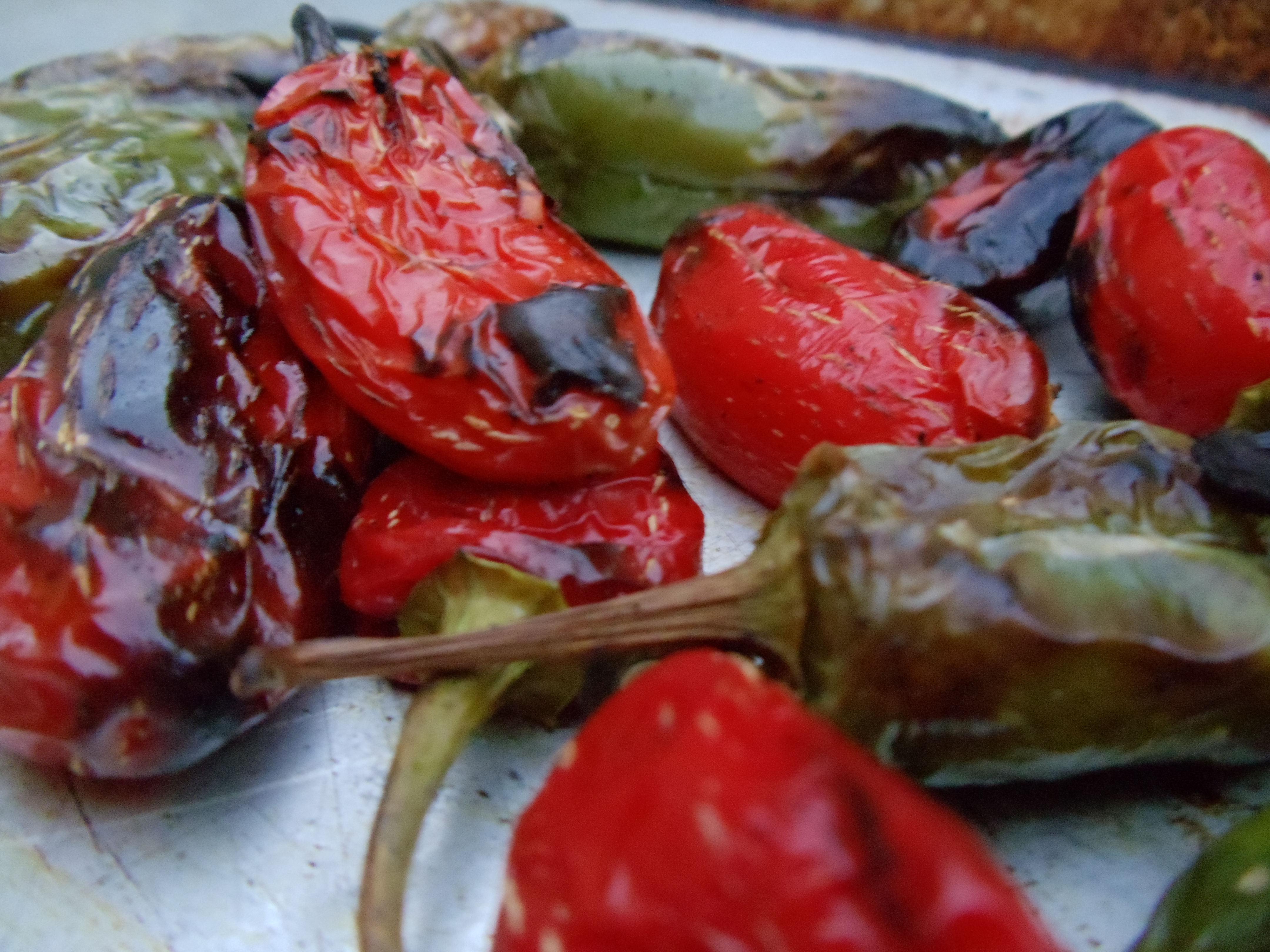
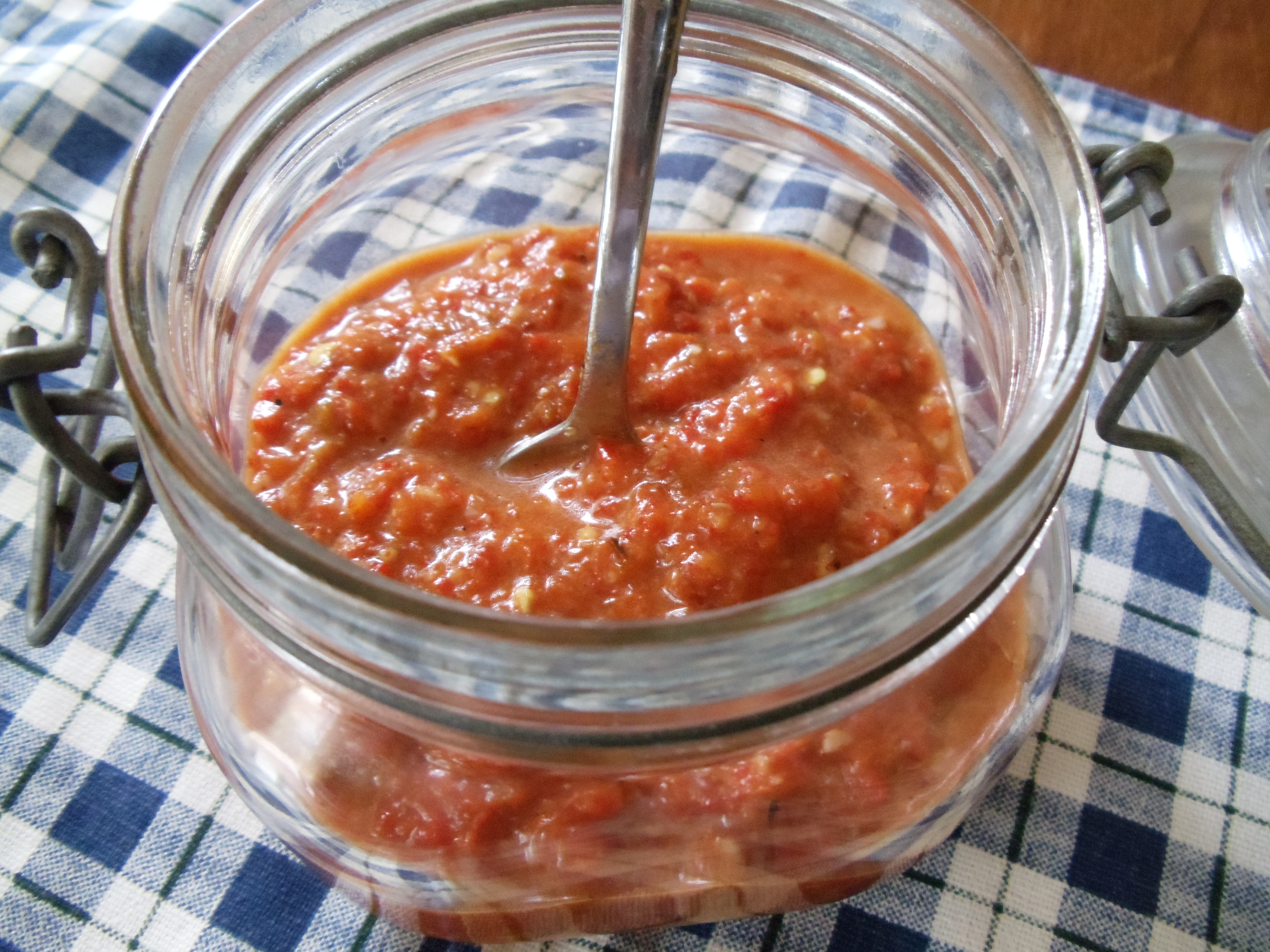
Bella and I planted red bell pepper and jalapeno seedlings at the beginning of the summer, so with a plethora of home-grown peppers, I made a batch of this year’s hottest condiment, harissa. This North African sauce can be purchased in jars, but is a cinch to prep at home. The effort pays off with a fresh, snappy bite that is a delicious accent to vegetables, meats and eggs.

Backyard Pepper Pot Harissa

Makes 2 cups

2 red bell peppers

6 red jalapeno chiles

6 garlic cloves

1 teaspoon kosher salt

1/2 teaspoon coriander

1/2 teaspoon cumin

olive oil

Char the peppers over an open flame, either on a gas range or grill, until the skin is blackened all over. Place the peppers in a bowl and cover to steam the skin away from the pepper. Cool for 10 minutes, then rub the blackened skin away from the peppers with a paper towel. Pull out the stem, pull the peppers into strips and discard the seed pod. Don’t worry about any bits of blackened skin or seeds still clinging to the peppers, they can be included in the sauce.

Place peeled, seeded peppers in a food processor with the garlic, salt, coriander, cumin and enough olive oil to make the pepper mixture slightly moist. Process the peppers until they are smooth and taste for seasoning, adjusting if needed. Place in an airtight container and store in the refrigerator for up to 2 weeks. 

Collard Greens

We’re going Brazilian for Labor Day…barbecue, that is. You may know that my husband is from Rio de Janiero, where meat is king and starch is its royal court. Every few weeks, we throw some rock salt on a tri tip and grill it to succulent perfection. Nothing beats that salty, charred crust, which we serve up with white rice, black beans, farofa and molho Brasieiro, a salsa-like tomato topping.

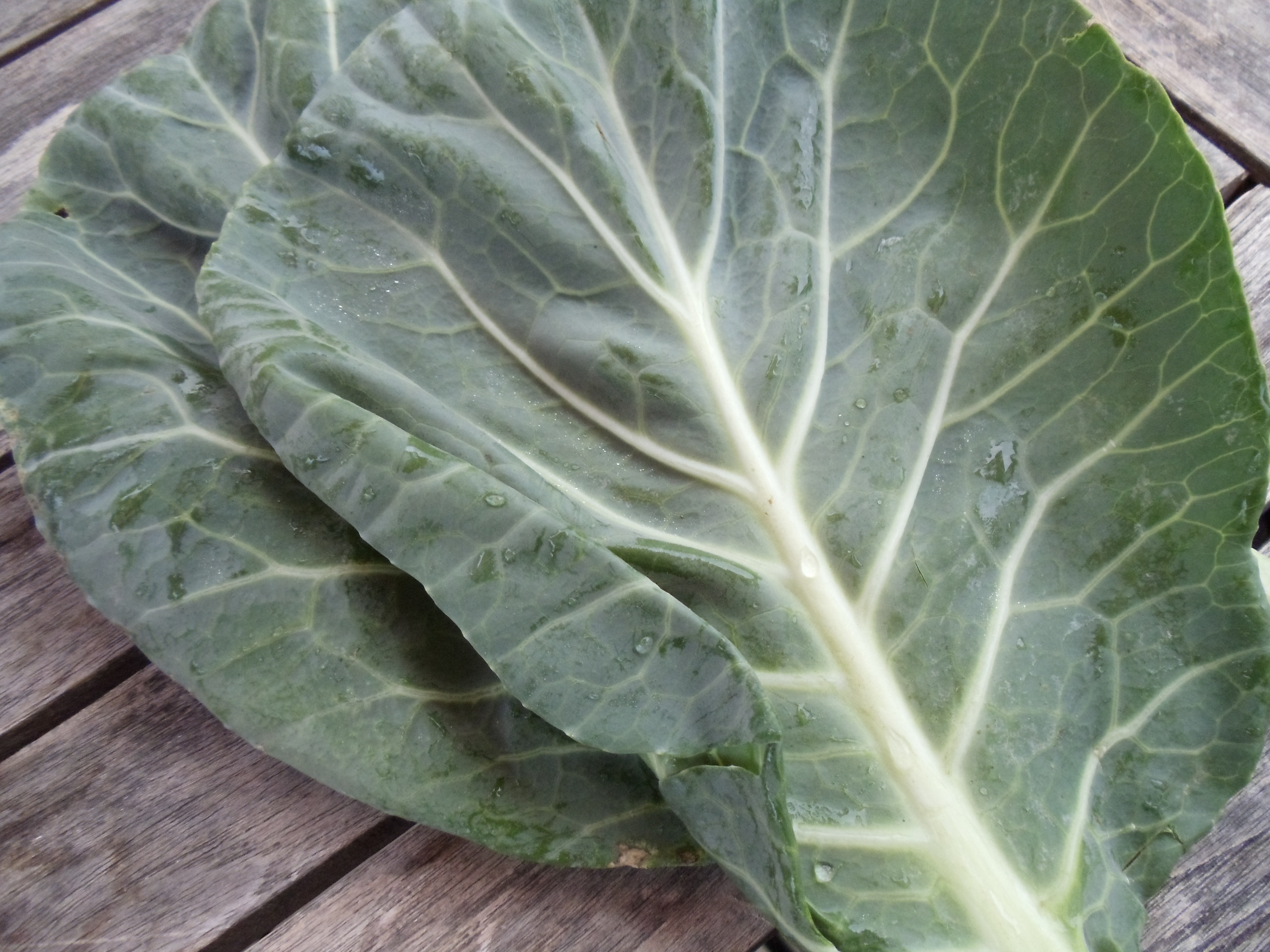
But I’m a veggie girl who needs to have a good dose of greens in every meal, so I always serve up a traditional churrasco side dish of sauteed collard greens, which you might find in your farm box late winter through late summer. You can include these on any barbecue menu, they add a lively, bitter crunch to whatever you throw on the grill.

Brazilian Collard Greens (Couve a Mineira)

Serves 4-6

1 1/4 pound collard greens, stems and center ribs discarded and leaves halved lengthwise

3 garlic cloves, cut into thin slices

Olive oil, salt and pepper

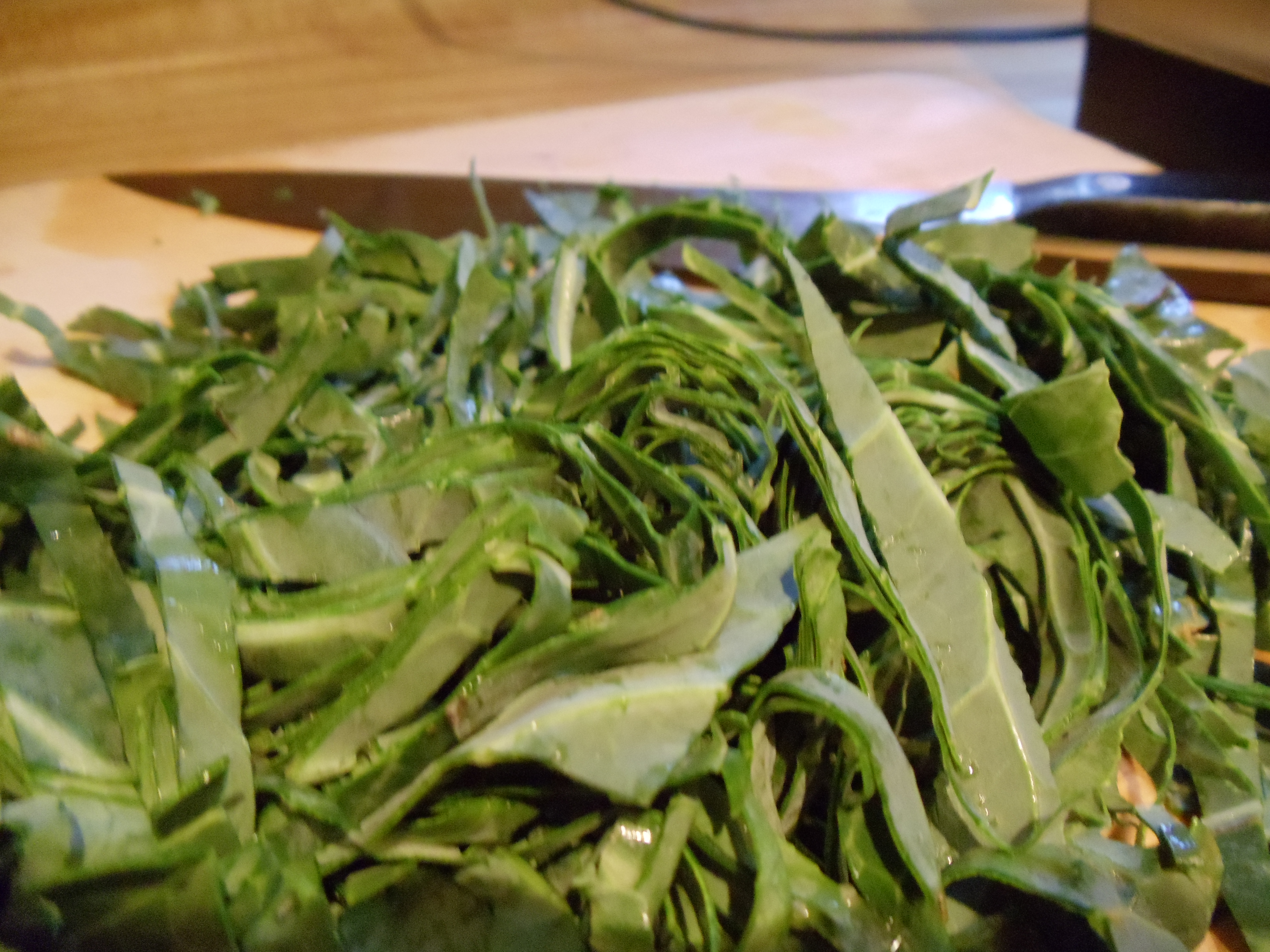
Cutting these collard greens into micro-thin slices helps them cook quickly and taste fresh and bright.

Stack half of collard leaves and roll into a cigar shape. Cut crosswise into very thin strips (1/16 inch wide). Repeat with remainder.

Heat oil in a 12-inch heavy skillet over medium heat until it shimmers, then cook garlic, stirring, 30 seconds. Add collards with 1/4 teaspoon pepper and salt and cook, tossing, until just tender and bright green, 3 to 4 minutes. Taste for seasoning, adjust if neccesary, and serve.

 
1 7 8 9 13